A Salamander Speaks
For most of us, salamanders are silent creatures — secretive, still, and largely invisible to the world around them. But deep in the mountain wetlands of Darjeeling, West Bengal, a remarkable discovery turned that assumption on its head. A salamander spoke.
In this stunning short documentary from RoundGlass Sustain, wildlife filmmakers Ajay and Vijay Bedi reveal the first-ever recorded vocalization of the male Himalayan salamander — a low, distinctive ‘pataak’ sound captured entirely by accident while the brothers were editing footage from their award-winning film, The Secret Life of Frogs.
India’s Rare Tailed Salamander
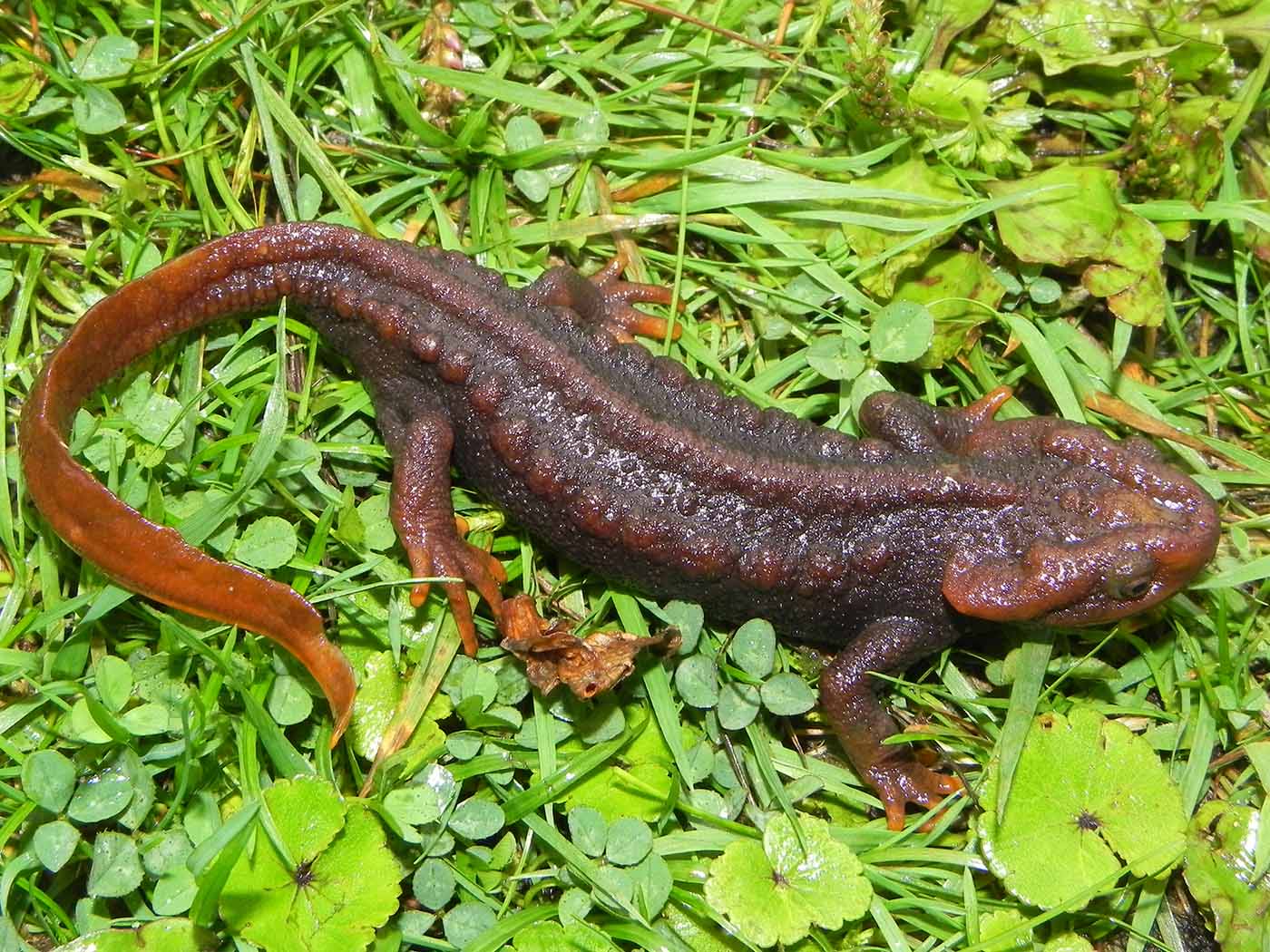
The Himalayan crocodile salamander (Tylototriton himalayanus) is one of India’s most extraordinary amphibians — and one of its least known. Found in the small ephemeral pools and seasonal wetlands of the Darjeeling district, it is one of only two tailed amphibian species found in India, the other being Tylototriton zaimeng, found in Manipur.
Like all amphibians, this salamander breathes through its skin and depends entirely on moist, healthy ecosystems to survive. Its life revolves around the monsoon-season water bodies and mountain marshes of the Himalayas — fragile habitats that are disappearing at an alarming rate due to development and water pollution.
A Discovery Made in the Edit Suite
The Bedi brothers weren’t looking for a vocalizing salamander. They were in post-production on their amphibian documentary when they heard something unexpected in their footage — a low sound from an animal science had long assumed was silent. The discovery sent them back to the field, this time specifically in search of salamanders, and what they found exceeded all expectations.
The brothers documented the species’ remarkable mating behavior: the larger female positioning herself at the center of a wetland while males approach and perform elaborate courtship displays, followed by synchronized swimming — a slow, gliding waltz that few humans have ever witnessed.
Their findings were published in Salamandra, a German scientific journal dedicated to herpetology, formally confirming that the species vocalizes during mating. A new chapter in our understanding of Indian amphibians had officially opened.
SAVE THE FROGS! India and the Science Behind the Story
The video features Sarbani Nag, President of SAVE THE FROGS! India, whose scientific research focuses specifically on Himalayan salamanders in the Darjeeling region. Her work represents the kind of on-the-ground expertise that transforms documentary footage into conservation action — helping researchers and policymakers understand what this species needs to survive and why its mountain wetland habitat must be protected.
SAVE THE FROGS! India works to advance amphibian conservation across the subcontinent, supporting research, education, and advocacy for species like the Himalayan crocodile salamander that rarely receive the attention they deserve.
A Species Without a Voice — Until Now
The filmmakers put it simply: the Himalayan salamander is a species that doesn’t yet have a voice for its own protection. The wetlands it depends on are shrinking. The communities coexisting with it often don’t know it exists. And the window for study and conservation action is narrowing.
But that’s beginning to change. The Bedi brothers’ footage, combined with scientific documentation and growing international awareness, is helping this quiet amphibian finally be heard.
As one researcher in the film says: “As long as the wetlands will be there, the salamanders will be there. But if the wetlands are gone, the salamanders will also be gone.”
What You Can Do
World Salamander Day is March 28, 2026 — a day dedicated to celebrating and protecting the world’s 700+ salamander species. You can help by sharing this video and spreading awareness about the Himalayan salamander, supporting SAVE THE FROGS! India and their conservation work, and learning more about salamanders and the wetland habitats they depend on right here at World Salamander Day.
The salamander that speaks deserves to be heard.